Modernize your warehouse with RFID: Complete Guide + Implementation Checklist.

It’s 7 AM. Your truck leaves in 90 minutes for a festival setup. You’re in the warehouse with a clipboard, checking off 200 fixtures, 50 moving heads, and piles of cables. Then someone asks, “Did we pack the backup controllers?” You don’t know because they’re buried in a flight case that’s already on the truck.
Sound familiar? This is what happens when manual tracking hits its limits.
The problem with manual tracking
Most event companies track equipment with paper lists, Excel, or Google Docs. It works for small jobs, but bigger productions show the problems.
Manual checking means opening every case to verify what's inside. Confirming a specific item is packed means unpacking until you find it. Then the mistakes happen, items get marked as packed but are still sitting in the warehouse, and equipment goes missing with no record of what happened.
During busy periods, your team moves fast, and manual tracking can't keep up. RFID changes that by scanning everything at once, even through closed cases.
How does RFID work?
RFID (Radio-Frequency Identification) uses small tags attached to your equipment. Each tag contains a chip that communicates wirelessly with a reader. Point the reader at your equipment, and it identifies every tagged item within range without having to scan individual barcodes or open cases.
Here's what makes RFID different from QR codes or barcodes:
- Scan without seeing the item. RFID readers detect tags through materials. That means you can scan equipment inside closed flight cases without opening them.
- Scan through stacked cases. Got cases stacked? RFID can read tags in the bottom case without moving anything, making prep move faster.
- Scan hundreds of items in seconds. The reader captures everything instantly, without scanning each QR code or waiting between scans.
You don't need to see the barcode or worry about damaged labels. Just point and scan. So, how do you roll this out in your warehouse?
RFID implementation checklist
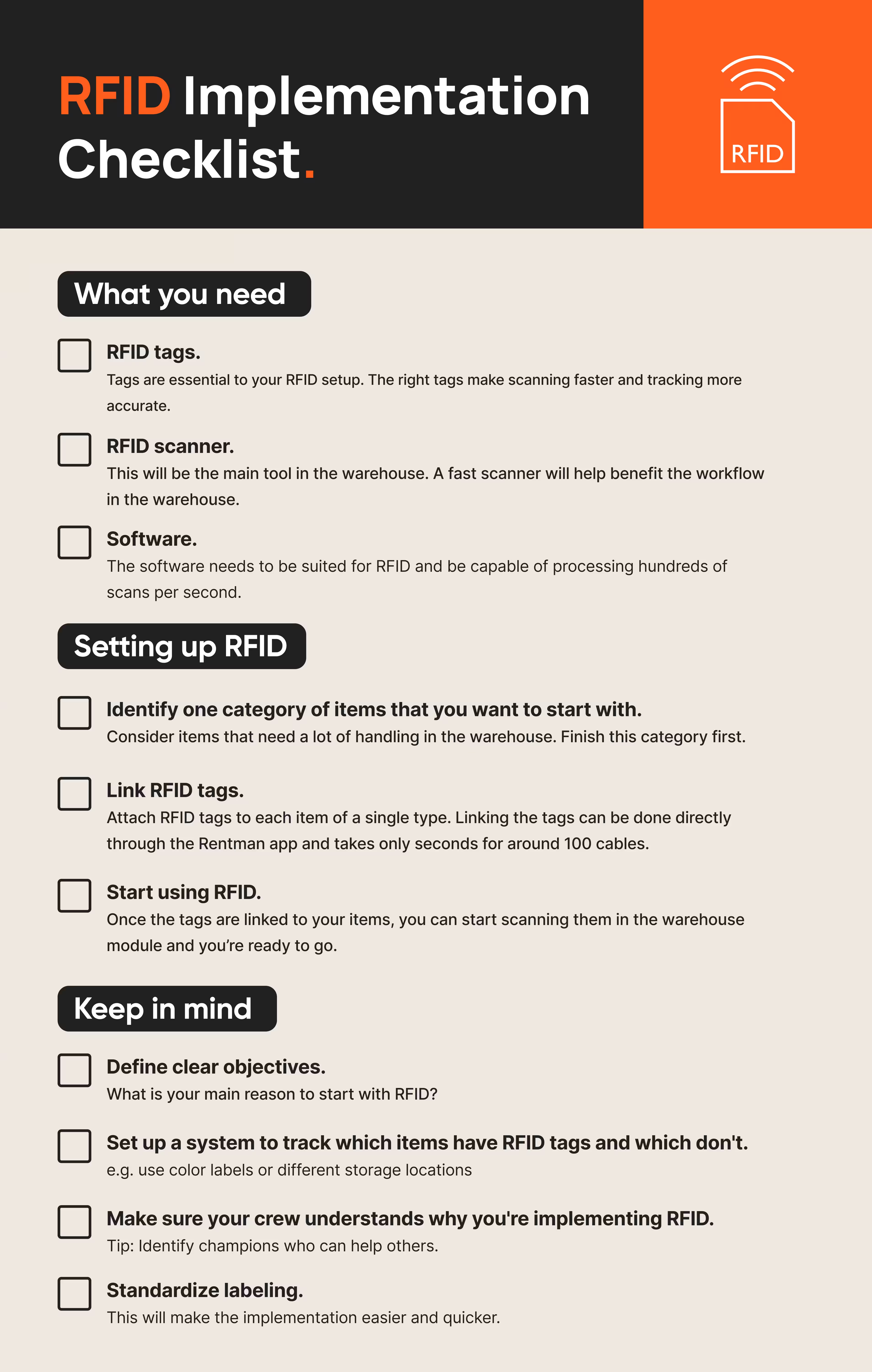
Rolling out RFID isn't complicated, but it does require planning. You'll need to tag your equipment, test your setup, and get your team comfortable with the new process. Most companies start small by tagging one equipment category, testing it on a few jobs, then expanding from there.
Here's a practical checklist for implementing RFID in your operation:
Why AV & live event production companies are choosing RFID
RFID saves time. Companies using RFID report 40% faster warehouse operations. Your crew spends less time verifying and more time setting up.
- Better packing accuracy: You know exactly what's in each case before it leaves the warehouse. If something's missing, you find out immediately (not halfway through the setup).
- Faster prep: No more opening cases to check contents or lifting stacks to verify items. Your crew can scan entire truckloads in minutes.
- Fewer equipment losses: RFID tracks where items are, so equipment is less likely to disappear between jobs. When something does go missing, you know when and where it was last scanned.
- Smoother load-ins and load-outs: Confirm everything's accounted for before leaving the venue. No surprise shortages the next morning.
- Real-time coordination: Everyone sees the same data. If someone scans a case and an item is missing, the whole team knows immediately.
A quick note on software integration: RFID works best when connected to your equipment management platform. Rentman's inventory management system includes RFID support, which means your scans automatically sync with your project planning and warehouse workflows. You can check out Rentman's inventory product to learn more.
Is RFID worth it?
RFID makes the most sense when you're managing large inventories and complex productions. If you're handling hundreds of pieces of equipment, running multiple jobs simultaneously, or dealing with multi-day events, RFID changes how your warehouse operates.
Your crew spends less time checking and more time on what actually matters. Everyone has accurate information when they need it. And when the truck leaves at 7 AM, you know exactly what's inside.
Domande frequenti